
Telangana
Telangana Plans Reorganisation of Districts and Mandals to Fix Administrative Gaps

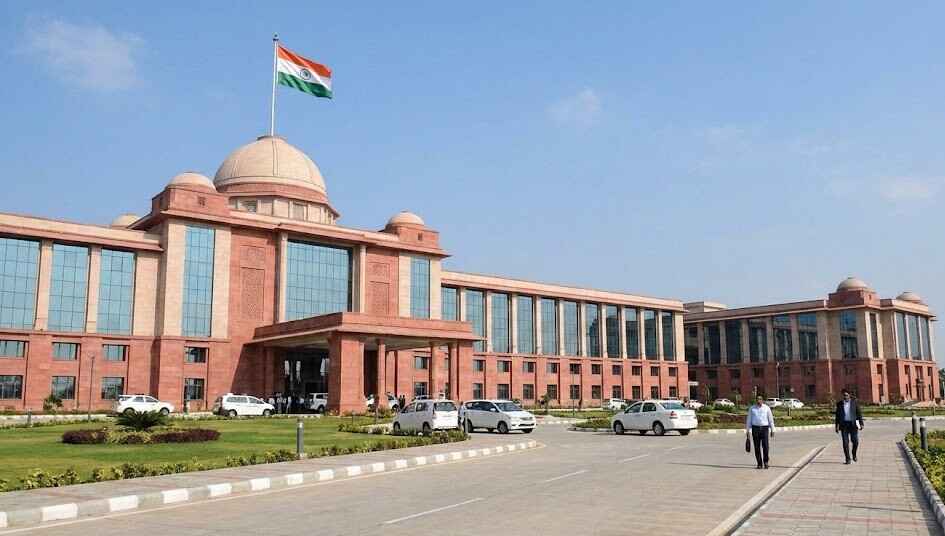
The Telangana government has announced plans to reorganise districts and mandals in the state to correct administrative imbalances and address issues arising from previous restructuring exercises. Revenue Minister Ponguleti Srinivas Reddy said the move aims to create a more rational, inclusive, and efficient administrative framework.
Speaking on the proposal, the minister noted that certain districts and mandals currently face challenges related to uneven population distribution, geographical constraints, accessibility issues, and administrative inefficiencies. The planned reorganisation is intended to improve governance delivery, reduce public inconvenience, and ensure better coordination at the local level.
Officials indicated that the government will review existing boundaries, population data, and service delivery metrics before finalising any changes. Public feedback, administrative feasibility, and impact on local governance structures are expected to be key considerations during the process.
The minister emphasised that the exercise is not aimed at political restructuring but at improving administrative efficiency and correcting past errors that emerged after earlier district and mandal formations. The government is expected to hold consultations with district collectors, local representatives, and other stakeholders before taking final decisions.
If implemented, the reorganisation could lead to changes in district boundaries, the creation of new mandals, or the merging of existing ones, with the objective of strengthening grassroots governance and improving access to public services.
Further details on timelines and the scope of the restructuring are expected to be announced after preliminary assessments and consultations are completed.
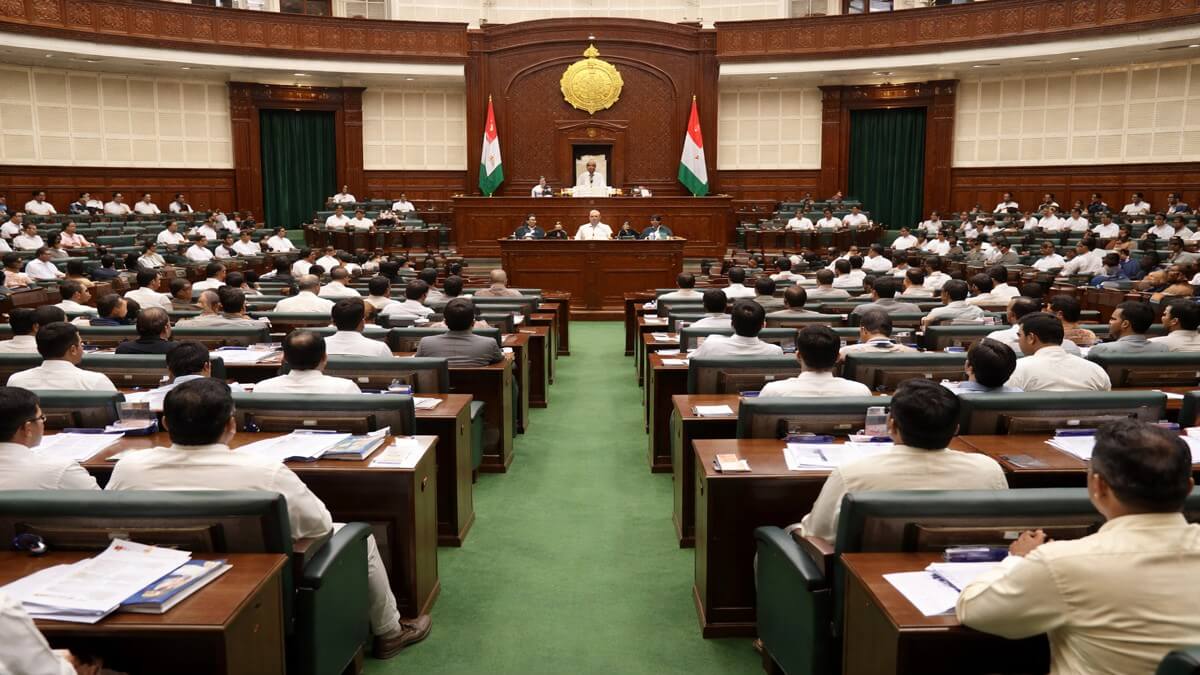
Criticism of the Union Budget 2026–27 has resurfaced in Telangana, with state leaders arguing that key projects worth ₹1.63 lakh crore have not received adequate allocation from the Centre. The debate has gained momentum in political circles, with opposition and ruling representatives trading charges over the distribution of funds.
According to state leaders, several pending infrastructure and development proposals — including irrigation, transport connectivity, and industrial expansion projects — were either underfunded or not explicitly mentioned in the budget documents. Critics claim this reflects a pattern of insufficient financial support for Telangana’s long-term growth priorities.
Leaders aligned with the state government have stated that despite Telangana’s contribution to national revenue, expected allocations for major initiatives were not reflected proportionately in the budget. They argue that strategic investments in infrastructure and regional development are necessary to sustain economic momentum.
On the other hand, representatives from the Centre maintain that allocations are made based on national priorities, project readiness, and fiscal considerations. They emphasise that several ongoing schemes continue to benefit Telangana under centrally sponsored programmes.
The issue is likely to remain politically sensitive as discussions continue in the Assembly and public forums. Observers note that budget interpretation often varies across states, particularly when large-scale infrastructure demands are involved.
Further clarity is expected as detailed departmental fund releases and project approvals are reviewed in the coming months.
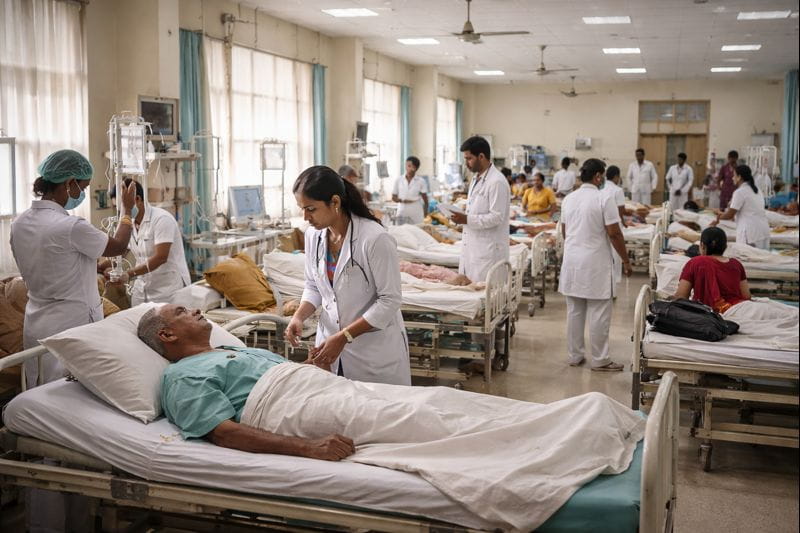
A high proportion of typhoid-related deaths reported from Telangana has raised fresh concerns over public health infrastructure, sanitation standards, and disease surveillance systems in the state. Recent health data indicates that Telangana accounts for a disproportionately large share of typhoid and paratyphoid fatalities compared to its population size.
Public health experts say the numbers point toward deeper systemic issues, including unsafe drinking water, poor sanitation in certain urban and rural pockets, and gaps in early diagnosis and treatment. Typhoid, a bacterial infection caused by contaminated food and water, is largely preventable with improved hygiene, vaccination, and timely medical care.
Medical professionals have emphasized the need for stronger awareness campaigns, routine vaccination drives in high-risk communities, and stricter monitoring of water quality. Rapid urbanisation, unregulated water sources, and seasonal outbreaks may also be contributing factors.
Officials have stated that steps are being taken to strengthen disease surveillance and primary healthcare response. However, health activists argue that sustained investment in sanitation infrastructure and community health education is critical to reducing preventable fatalities.
The situation has triggered renewed debate over public health priorities, especially in light of Telangana’s expanding urban footprint and population growth. Experts warn that without systemic interventions, similar outbreaks could continue to pose risks in vulnerable districts.
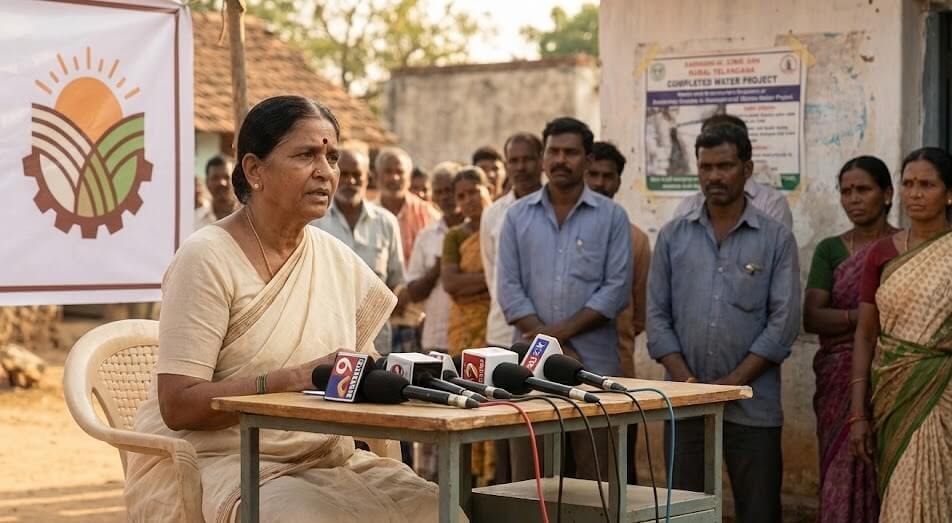
Telangana Panchayat Raj Minister D. Anasuya, popularly known as Seethakka, has been appointed to the core committee of the MGNREGA Bachao Sangram, a nationwide campaign aimed at protecting and restoring the rural employment guarantee programme. The movement is being led by a coalition of labour organisations, farmers’ groups, and social activists opposing recent changes to the scheme.
According to organisers, the campaign seeks to safeguard the original intent of the Mahatma Gandhi National Rural Employment Guarantee Act (MGNREGA), including guaranteed workdays, timely wage payments, and adequate central funding. Concerns have been raised over reduced allocations, delayed payments, and policy changes that critics say weaken employment security for rural households.
As a core committee member, Seethakka is expected to play a key role in coordinating outreach, mobilising state-level participation, and engaging with stakeholders across regions. Her appointment is seen as significant, given her background in grassroots politics and her portfolio overseeing rural development and panchayat governance in Telangana.
The MGNREGA Bachao Sangram plans a series of protests, consultations, and awareness programmes across multiple states to highlight the impact of policy changes on rural livelihoods. Organisers argue that the scheme remains a critical safety net, particularly for marginal farmers, women workers, and migrant labourers.
The development adds a political dimension to the ongoing national debate over rural employment and welfare spending, with states and the Centre expected to continue discussions in the coming months.


Ram Charan’s Newborn Twins Named Shiva Ram And Anveera Devi

Delhi Schools Receive Bomb Threats; Police and Bomb Squads Deployed Across City

Suryakumar Yadav Holds Firm as India Recover From Early Collapse

Dhurandhar Dominates Theatres: A Winning Streak Bollywood Can’t Ignore

Tollywood Actor Varun Tej and Lavanya Tripathi Spotted With Newborn Son Vaayuv at Hyderabad Airport

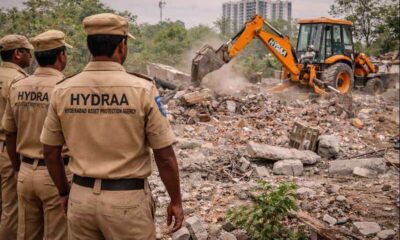
HYDRAA Recovers Public Land Worth ₹2,500 Crore from Encroachers in Major Crackdown
-
 Entertainment7 months ago
Dhurandhar Dominates Theatres: A Winning Streak Bollywood Can’t Ignore
-
 Hyderabad7 months ago
Tollywood Actor Varun Tej and Lavanya Tripathi Spotted With Newborn Son Vaayuv at Hyderabad Airport
-
 Hyderabad7 months ago
HYDRAA Recovers Public Land Worth ₹2,500 Crore from Encroachers in Major Crackdown
-
 Telangana7 months ago
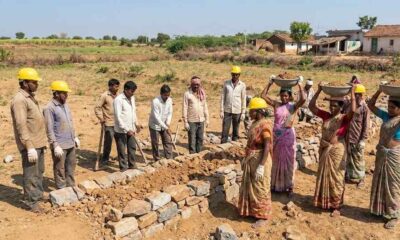
Telangana Govt Plans Major Boost to Rural Employment Scheme for 2026
-

 India6 months ago
📈 India poised to become world’s third-largest economy
-

 Entertainment7 months ago
Historic Collaboration: Chiranjeevi and Mohanlal Join Hands for Major Pan-India Project
-

 Entertainment7 months ago
Sehwag Praises Tollywood, Calls Mahesh Babu and Allu Arjun His Favourite Stars
-

 Business7 months ago
Hyderabad Leads Quick-Commerce Shift as Instamart Sees Unusual High-Value Orders